
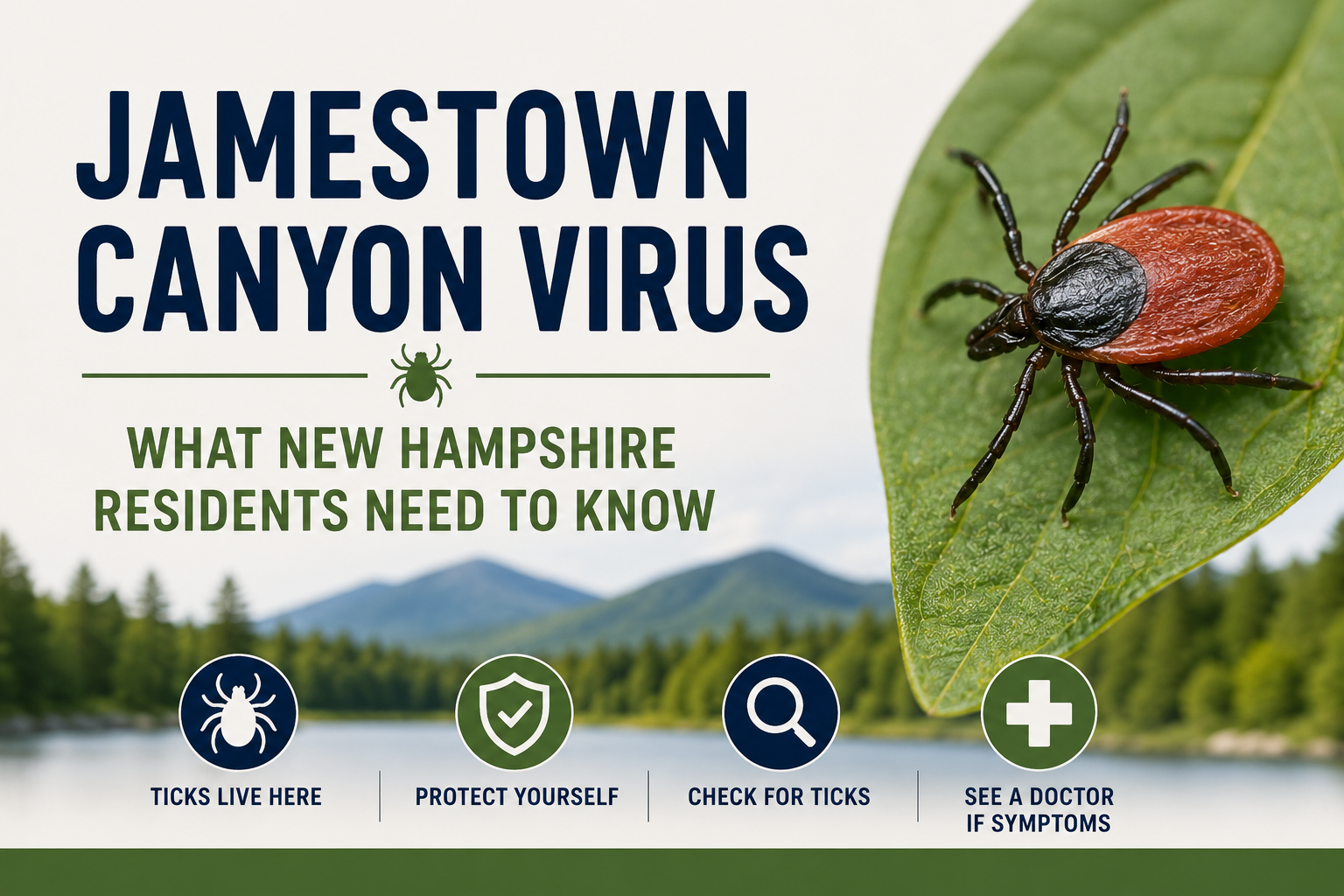
Summer in New Hampshire means spending more time outdoors, and while most mosquito bites are an annoyance, they can occasionally spread diseases. One virus that public health officials continue to monitor is Jamestown Canyon virus (JCV), a rare mosquito-borne illness found throughout North America, including areas where deer and mosquitoes are common.
Although serious illness remains uncommon, awareness and prevention are the best ways to protect yourself and your family.
What Is Jamestown Canyon Virus?
Jamestown Canyon virus is transmitted through the bite of an infected mosquito. Mosquitoes become infected after feeding on certain animals—particularly deer—and can then pass the virus to humans. There is no evidence that the virus spreads from person to person.
Most infections occur during the warmer months, generally between April and September, when mosquito activity is at its highest.
How Common Is It?
Jamestown Canyon virus remains rare, but reported cases have increased over the past decade, largely because health care providers are testing for it more frequently and awareness has improved.
Between 2011 and 2022, the CDC confirmed 281 cases across 23 states, averaging about 23 severe cases each year. As of late July 2026, one human case had been reported in the United States.
The good news is that most infections are mild or cause no symptoms at all, and the overall risk of serious illness remains low.
What Are the Symptoms?
For people who do become ill, symptoms may include:
Fever
Headache
Fatigue
In rare cases, the virus can affect the brain and nervous system, causing encephalitis (brain inflammation) or meningitis (inflammation of the tissues surrounding the brain and spinal cord). Symptoms typically appear within a few days to two weeks after a mosquito bite.
There is currently no vaccine and no specific antiviral treatment for Jamestown Canyon virus. Medical care focuses on treating symptoms and supporting recovery.
Prevention Is the Best Protection
Because there is no vaccine, preventing mosquito bites is the most effective way to reduce your risk.
The New Hampshire Department of Health and Human Services recommends:
Using EPA-registered insect repellents.
Wearing long sleeves and long pants when mosquitoes are active.
Repairing window and door screens.
Emptying standing water from buckets, birdbaths, wheelbarrows, gutters, and other containers where mosquitoes breed.
Recycling old tires and removing other items that collect water.
Using protective netting over strollers and play areas for young children.
These simple steps also help reduce the risk of other mosquito-borne diseases. Read more here.
A Reminder for New Hampshire
Jamestown Canyon virus is uncommon, but it serves as an important reminder that public health is often about prevention. A few minutes spent eliminating standing water around your yard or applying insect repellent can significantly reduce the risk of mosquito-borne illnesses.
As New Hampshire residents continue to enjoy the outdoors this summer, staying informed and taking simple preventive measures can help keep families safe.
If you have questions about Jamestown Canyon virus or develop symptoms after a mosquito bite, contact your health care provider or the New Hampshire Department of Health and Human Services Bureau of Infectious Disease Control.