
Annual Meeting: Bright Minds, Big Ideas: What Public Health Students and Leaders Showed Us in 2026
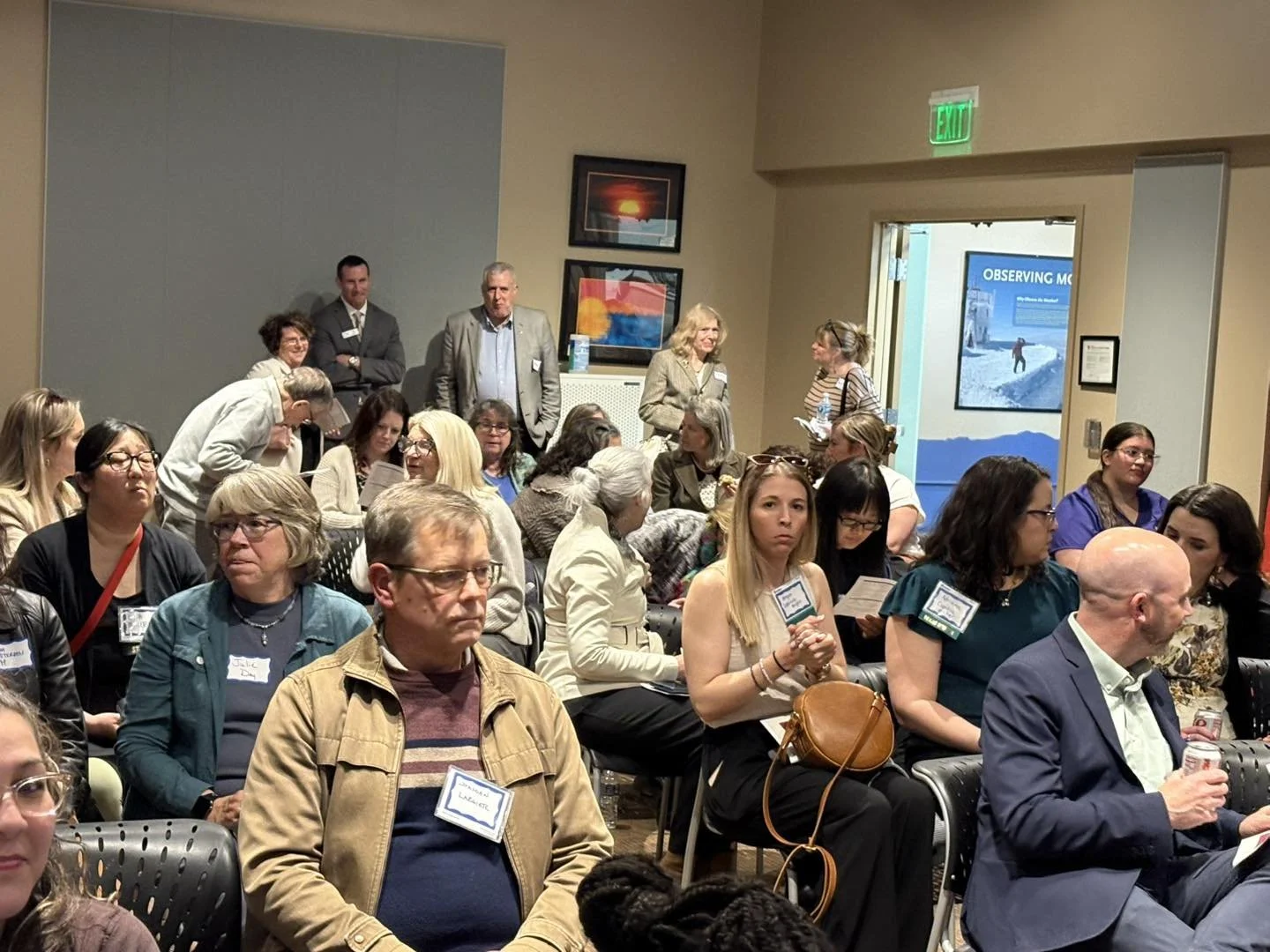
At the 2026 Annual Meeting of the New Hampshire Public Health Association, the message was both clear and encouraging: the future of public health is already here, and it’s deeply connected to the challenges we face right now.
With more than 80 people gathering at the McAuliffe-Shepard Discovery Center in Concord to share ideas, research, and real-world experience, the event brought together students, practitioners, and leaders at a moment when New Hampshire is navigating both significant opportunity and real strain across its health systems.
This year’s meeting was made possible through the generous support of the Gold Sponsor, the New Hampshire Charitable Foundation, and Silver Sponsors, the Endowment for Health and WellSense, whose investment reflects a shared commitment to strengthening public health across the state.
Keynote speaker Donnalee Lozeau delivered a message that matched the moment: direct, experienced, and grounded in the realities of implementation. As Director of the Governor’s Office of New Opportunities & Rural Transformational Health (GO-NORTH), Lozeau has spent a career working at the intersection of policy and practice—from her early years in the New Hampshire House of Representatives to her tenure as Nashua’s first female mayor.
At the center of her keynote was New Hampshire’s Rural Health Transformation Program, initially backed by more than $204 million in federal funding as part of a broader national investment. The scale of the opportunity is significant—but so is the pressure to deliver on time.
The state had just 50 days to design and submit its plan, requiring rapid coordination across hospitals, community health centers, EMS providers, behavioral health organizations, and communities across New Hampshire. It was a compressed, complex process, one that, as Lozeau acknowledged, is still evolving.
“This is not simple work,” she noted, underscoring both the urgency and the challenge of aligning systems that have historically operated independently.
That theme—alignment—carried through the broader conversation of the day and into the reflections of NHPHA Executive Director Tory Jennison, PhD, RN. New Hampshire, she noted, is not lacking in plans. In fact, the state has a strong foundation of data-driven strategies, from the State Health Improvement Plan to regional and community health efforts, the Age Well New Hampshire roadmap, and now the Rural Health Transformation Program.
But having local plans is not the same as having coordination.
Across these efforts, the same priorities emerge again and again: behavioral health, housing affordability, workforce shortages tied to cost of living, and persistent transportation barriers—particularly in rural communities. The consistency is striking, and it offers both validation and direction.
The challenge now is not identifying what needs to be done. It is connecting the work.
Too often, strong initiatives move forward in parallel rather than in partnership. The opportunity ahead is to bring those efforts into closer alignment, to ensure that funding, policy, and implementation reinforce one another rather than compete for attention or resources.
That is where the next phase of progress lies.
One of the clearest expressions of that future came through the student poster presentations, where emerging public health leaders presented work that was not only academically strong, but grounded in practical application. Six posters stood out for recognition, each offering a different lens on the challenges ahead—and the solutions already taking shape.
Jane Schintzius of the University of New Hampshire earned top honors, as voted by attendees, for Wild About Public Health: Launching a Student-Led Podcast. Her work captured something essential about modern public health: the need to communicate clearly, meet people where they are, and expand the reach of trusted information in new and creative ways.
Other student projects reflected the breadth and urgency of the field. Jennifer DeLucca of the Geisel School of Medicine at Dartmouth examined how emergency care is actually delivered in Northern New England, offering a clearer understanding of the realities facing rural systems. Sahel Syed Shuaid and Praburaman, also from Geisel, explored non-pharmacological approaches to managing pain in sickle cell disease, emphasizing patient-centered care beyond traditional treatment models. Nupoor Marwah, working across Dartmouth and the University of Pennsylvania, focused on emotional regulation interventions for adolescents—highlighting the importance of early support in mental health. Lisa Bauer of Brown University addressed equity in clinical research through a scoping review on the efficacy of weight loss drugs in Asian American populations. And Virginia Burkhart of Geisel examined the early presentation of polycystic ovary syndrome in adolescents, contributing to better identification and care during a critical stage of development.
Taken together, these poster projects pointed to a field that is increasingly interdisciplinary, more inclusive in its approach, and focused on real-world impact. They also set the stage for a keynote that brought those same themes into sharper focus at the systems level.
What made this year’s NHPHA Annual Meeting stand out was how clearly those threads came together. The students demonstrated where innovation is happening now. The keynote outlined the scale and complexity of the systems in play. And the broader discussion made clear that New Hampshire has both the insight and the capacity to move forward—if it can connect the pieces.
The ideas are here. The leadership is here. The urgency is real. The work ahead is making sure it all adds up.