

The goal was understanding how decisions made in our communities and at the State House influence health outcomes.
By Tory Jennison, PhD, RN, is the executive director of the New Hampshire Public Health Association
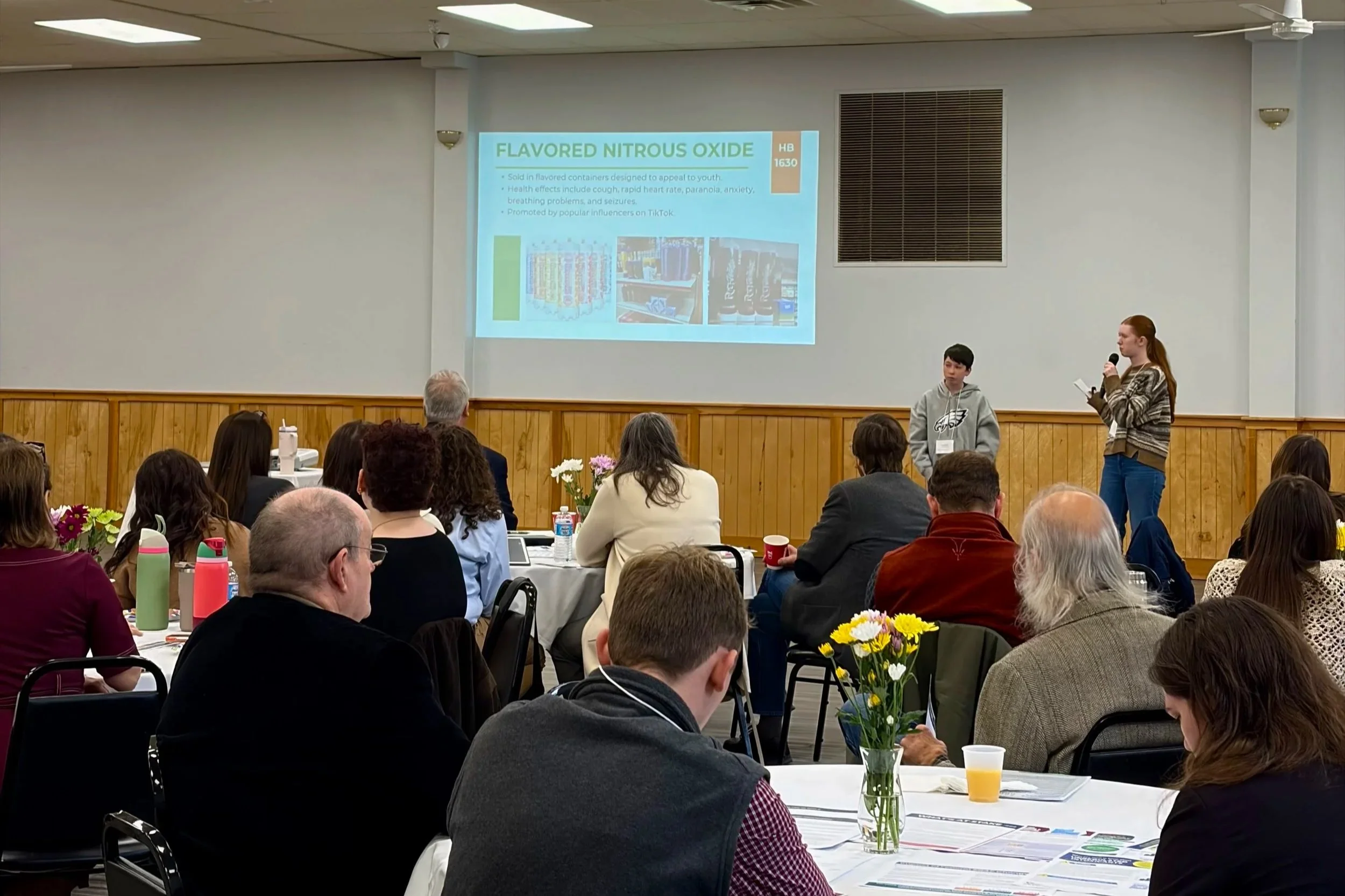
On February 6, community members gathered at the Rochester American Legion for the Strafford County Public Health Network (SCPHN) Advocacy Breakfast — a reminder that public health doesn’t happen only in clinics or hospitals. It is shaped by community decisions, local partnerships, and public policy.
More than 100 residents, service providers, municipal leaders, and several state legislators from both parties attended to discuss issues that affect everyday life across Strafford County. Hosted by SCPHN with support from the New Hampshire Charitable Foundation, the event created space for conversation, learning, and collaboration — but its purpose went beyond information sharing. The goal was understanding how decisions made in our communities and at the State House influence health outcomes.
The Issues Behind the Headlines
Presentations highlighted four interconnected areas that increasingly shape health in New Hampshire:
Substance Use & Mental Health
Ashley Wheeler of SCPHN, alongside youth advocates from Dover Youth 2 Youth, discussed the importance of early intervention and community-based prevention. Their message was clear: prevention and recovery programs work best when communities support youth engagement and reduce barriers to services.
Housing
Kara Rodenheizer of the Home for All Coalition explained how housing stability directly affects physical and mental health. When families lack safe and affordable housing, health conditions worsen, school attendance drops, and emergency service use increases.
Food Access
Riona Corr and Allison Bussiere highlighted food insecurity as a health issue, not simply an economic one. Reliable access to nutritious food affects chronic disease, childhood development, and long-term well-being.
Health Care Costs
Deb Fournier of the UNH Institute for Health Policy and Practice addressed affordability — a concern shared by families, employers, and providers alike. When people delay care due to cost, preventable conditions become crises, raising both human and financial costs.
These topics may appear separate, but together they illustrate a central public health truth: health outcomes are shaped as much by social conditions as by medical care.
Why This Matters
Over the past decade, New Hampshire has made measurable progress in areas such as substance use treatment, prevention, and community-based health initiatives. Many of these programs are evidence-based and improving lives.
However, systems that help people stay healthy can be unintentionally weakened. Administrative hurdles, funding instability, or changes that reduce access to services often affect the most vulnerable residents first. When prevention programs disappear or access becomes complicated, the result is not savings — it is larger gaps, higher emergency utilization, and greater long-term costs.
Public health professionals, community organizations, and local leaders are not asking to preserve the status quo. They are working to make systems more accessible, more efficient, and more responsive to community needs. That requires informed community participation and thoughtful policymaking.
Beyond the Event: What We All Can Do
The Advocacy Breakfast was not intended to be a one-day conversation. It was an invitation.
Residents do not need to be experts to participate in public health advocacy. Often, the most effective voices are community members sharing lived experience — whether that involves accessing mental health care, navigating housing challenges, or trying to understand medical bills.
SCPHN has made resources from the event publicly available, including data summaries, policy briefs, and community toolkits. These materials help residents understand how policies affect everyday life and how to communicate with decision-makers.
You can learn more and access those resources here:
SCPHN resource webpage https://www.scphn.org/resources/
Get Involved
Community members interested in continuing the conversation are encouraged to join the SCPHN Advocacy Collaborative. Participants receive updates on public health issues, opportunities to attend discussions, and guidance on how to communicate with policymakers respectfully and effectively.
Advocacy does not mean lobbying or politics. It means helping leaders understand how decisions affect real people in real communities.
Public health works best when communities are informed and engaged.
The breakfast showed what collaboration looks like.
The next step is participation. See you there.