
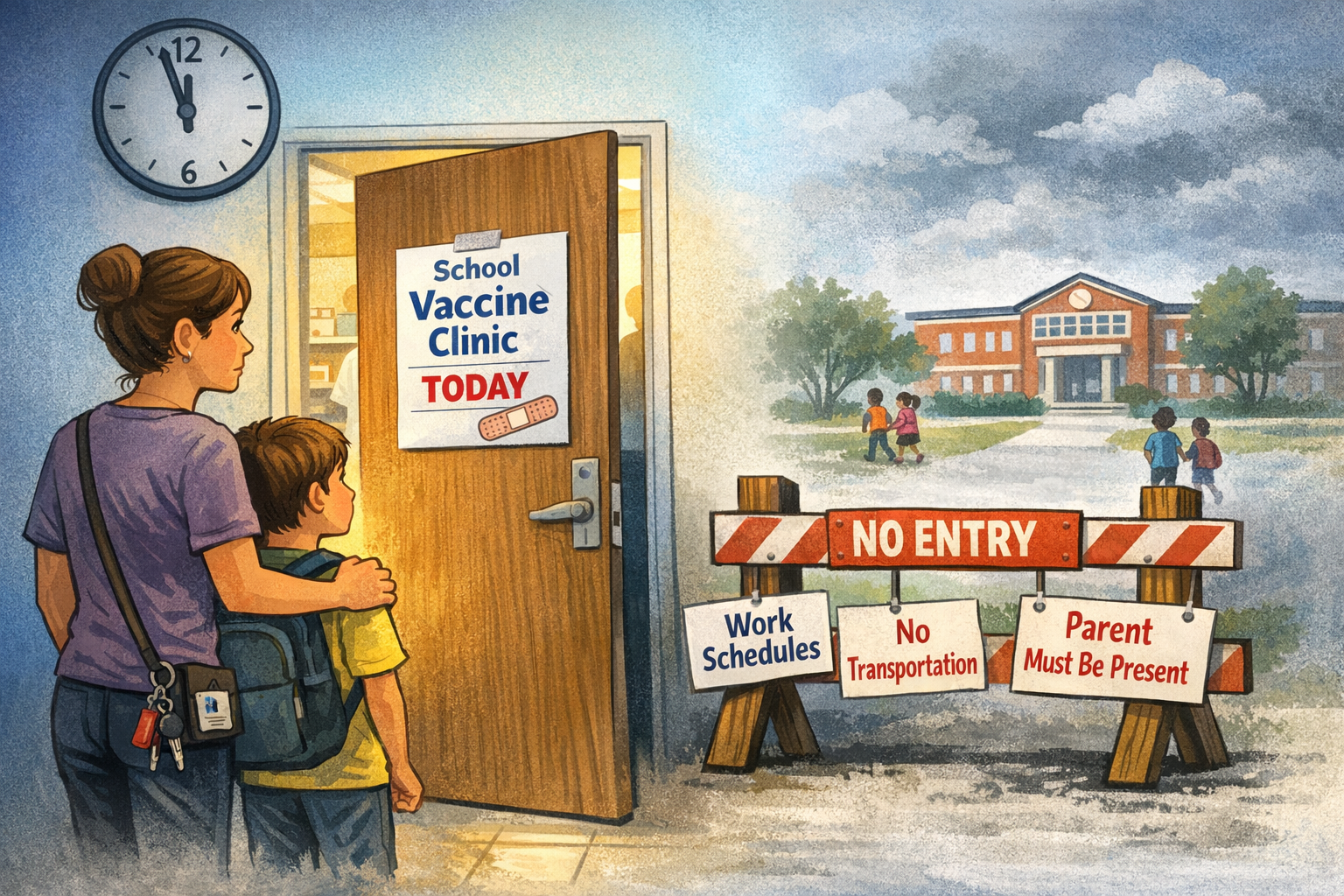
The New Hampshire Public Health Association opposes HB 1449, legislation that would restrict the hours that school-based vaccine clinics may operate and require a parent or legal guardian to be physically present during vaccine administration.
While we share the goal of ensuring informed parental involvement, this bill would create unnecessary barriers to timely immunization and reduce access for working families. Many parents are unable to attend daytime clinics due to work schedules, transportation limitations, or caregiving responsibilities. School-based vaccine programs have long served as an efficient, equitable way to ensure children stay up to date on required immunizations, protecting not only individual students but entire school communities.
Rather than limiting access, New Hampshire should be expanding it.
We encourage policymakers to pivot toward community-based vaccination models that increase convenience and flexibility for families. During the COVID-19 response, New Hampshire demonstrated that innovative partnerships between health systems, local health departments, schools, and community organizations can successfully deliver and be reimbursed for vaccines through drive-through clinics, evening and weekend hours, and dedicated community clinic spaces. These models allowed families to be vaccinated together, improved uptake, and reduced strain on primary care offices.
Recent research1 suggests that when parents have an opportunity to be immunized, childhood immunization rates increase as well. As a state, we should focus on reducing the barriers to immunization that parents face for themselves as one strategy to increase childhood vaccination rates. Approximately 89% of kindergarten students were up-to-date on all required vaccines during the 2024-2025 school year, which is lower than the CDC recommended 95% herd immunity threshold for the Measles, Mumps & Rubella vaccine. In some communities, vaccination rates are even lower, which increases the risk of community spread even more.
When response activity for one single disease outbreak can cost the state of NH between $100,000-$350,000, the path forward is not to narrow opportunities for vaccination—but to build on proven strategies that increase access, reduce disparities, and strengthen public health infrastructure. By expanding community partnerships and flexible clinic models, we can better support families in maintaining strong protections against vaccine-preventable disease.
1. Eric Geng Zhou, Jonathan Cantor, Autumn Gertz, Brian Elbel, John S. Brownstein, and Benjamin Rader:
Parental Factors Associated With Measles–Mumps–Rubella Vaccination in US Children Younger Than 5 Years American Journal of Public Health 115, 369_373, https://doi.org/10.2105/AJPH.2024.307912