Understanding New Hampshire's Medicaid Changes: What You Need to Know
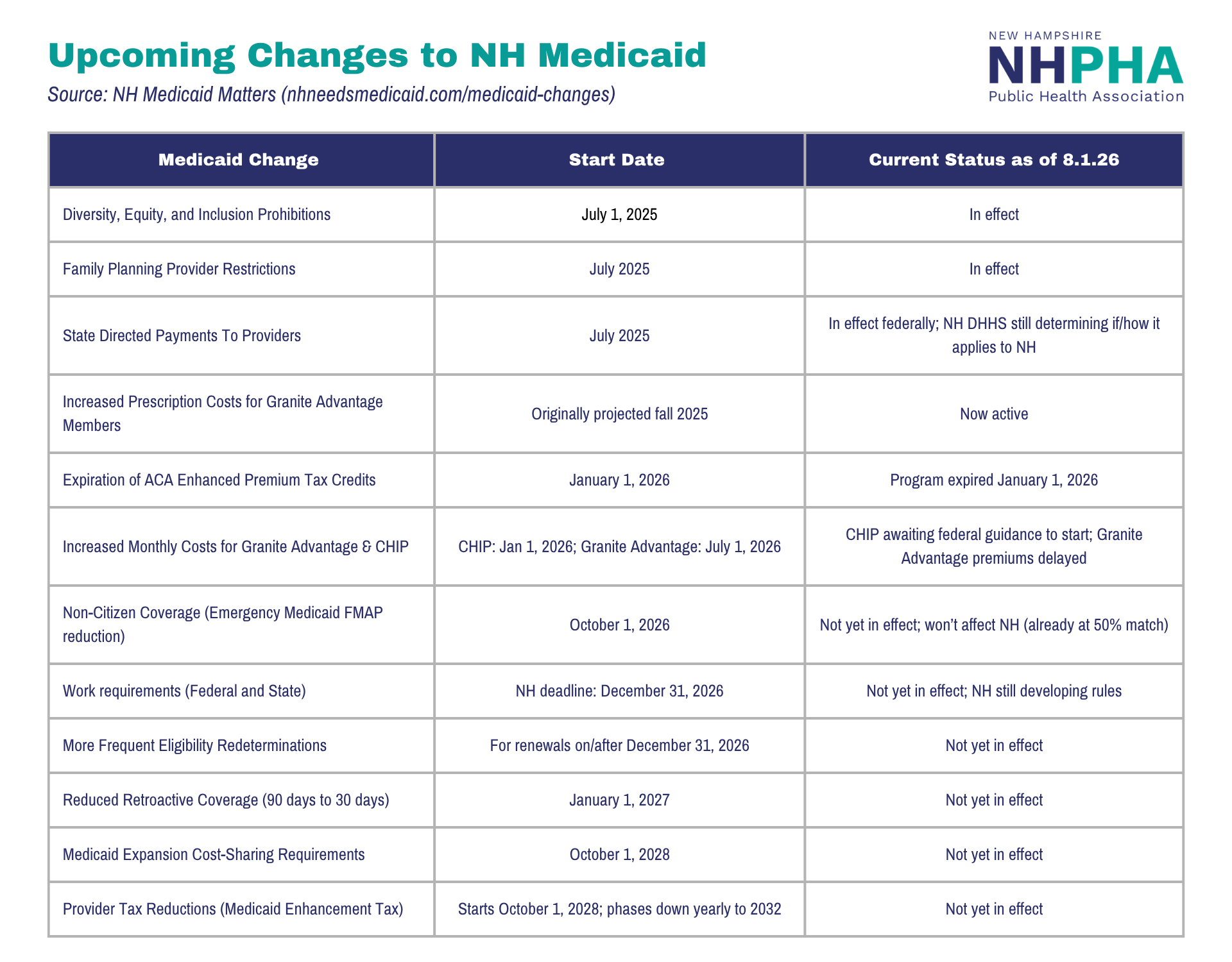
Medicaid is changing in New Hampshire, but not all of those changes are happening at once. To help understand the impacts and updates, we ran the numbers and came up with this chart.
Some federal changes are already in effect, while other reforms and cuts will be phased in over the next several years. Because implementation dates continue to shift and state guidance is still being developed, it will be difficult for patients, providers, and advocates to understand what has changed—and what is still to come. Here is what we know:
Changes Already in Effect
Several federal Medicaid changes are now active, including:
New restrictions related to diversity, equity and inclusion initiatives.
Family planning provider restrictions.
Higher prescription drug costs for many Granite Advantage members.
The expiration of the Affordable Care Act's enhanced premium tax credits, resulting in higher costs for many people purchasing insurance through the Marketplace.
Some provider payment changes have also taken effect at the federal level, although New Hampshire is still figuring out exactly how they will be implemented in the state.
Changes Coming Soon
Several significant reforms have not yet taken effect but are expected over the next few years, including:
Federal and state Medicaid work requirements, with New Hampshire developing implementation rules before the end of 2026.
More frequent eligibility reviews, which could require beneficiaries to verify their eligibility more often.
Reduced retroactive coverage, shortening the period Medicaid can cover medical bills incurred before enrollment from 90 days to 30 days beginning in 2027.
Future Medicaid cost-sharing requirements for expansion populations.
Gradual reductions in provider tax funding beginning in 2028.
While some changes may seem administrative, they will affect how people enroll, maintain coverage, and access care.
What This Means for New Hampshire
For patients, these changes will mean new paperwork, different eligibility requirements, higher out-of-pocket costs, and changes to coverage over time.
For providers, the reforms could affect reimbursement, administrative responsibilities, and financial stability—particularly for organizations that serve large numbers of Medicaid patients, like the hospitals in Coös County.
Because many provisions are still awaiting federal guidance or state implementation, the details will continue to evolve.
Where to Find More Information
The most comprehensive source for current information on New Hampshire Medicaid changes is NH Needs Medicaid, which is tracking implementation timelines, policy updates, and resources for beneficiaries and providers.
Visit: https://www.nhneedsmedicaid.com
As Medicaid policy continues to change, staying informed will help individuals, families, providers, and community organizations understand what the changes mean—and prepare for what's ahead.