
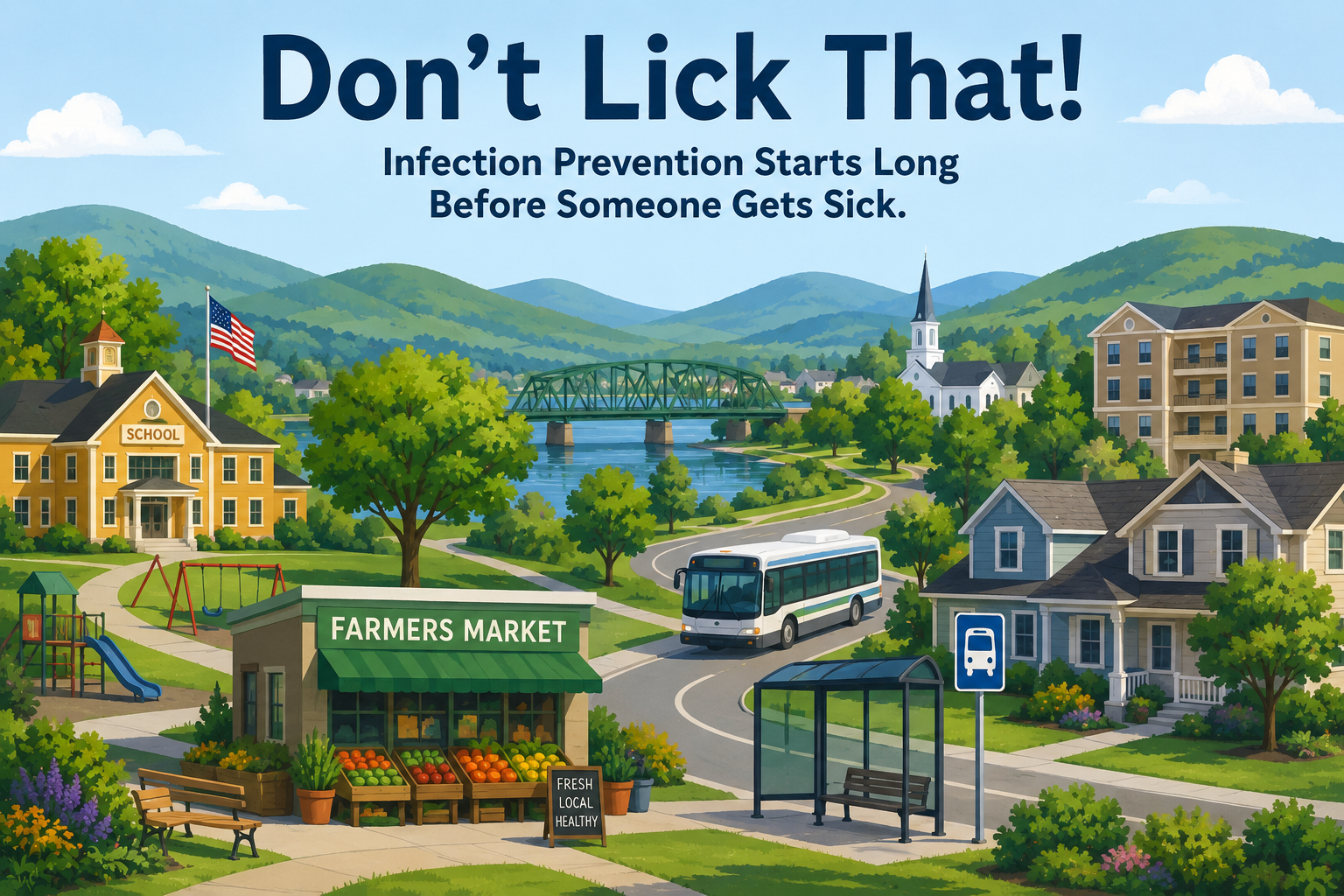
When most people think about infection prevention, they picture hand sanitizer, gloves, masks, isolation rooms, or hospital infection control teams. Those tools matter. But they are only part of the story.
At a recent meeting of New Hampshire Infection Control and Epidemiology Professionals (NHICEP), I challenged attendees to think more broadly about where infection prevention really begins. The answer? Long before anyone enters a doctor's office, hospital, nursing home, or clinic.
Looking Beyond the Bedside
Healthcare professionals are trained to focus on individual patients. Public health asks a different question: What is happening in our communities that helps people stay healthy—or puts them at risk? For infection preventionists, both perspectives are essential.
Disease outbreaks, antimicrobial resistance, foodborne illnesses, respiratory viruses, and healthcare-associated infections do not stop at the doors of healthcare facilities. They move through communities, workplaces, schools, housing developments, and transportation systems.
That means preventing infections requires understanding the broader public health environment and connecting public health with clinical expertise. The way public health is organized in New Hampshire makes creating those connections more challenging than many other states.
The Public Health System You May Not See
New Hampshire's public health system is highly decentralized. Responsibility for doing public health work (like disease prevention and health promotion) is shared among state agencies, regional Public Health Networks, municipal Health Officers, hospitals, healthcare coalitions, and community organizations, but legal authority to draft and enforce rules and regulations is constrained to federal, state and local government officials. These partnerships become critical during disease outbreaks, public health emergencies, vaccination campaigns, and community health initiatives. Unfortunately, many hospital and acute care health professionals know their own organizations well but have limited opportunities to work with partners in the broader public health system operating around them.
The stronger these relationships are before a crisis happens , the stronger our response will be when one does. Introducing healthcare folk to the strategic plans that identify our collective health priorities is one way NHPHA works to build those relationships. By increasing awareness of key plans, how they were created, and how they relate to each other, organizations can make better decisions about how to close gaps and strengthen connections between collaborative partners.
Public Health Priorities Shape Health Outcomes
A variety of statewide and regional plans help guide public health investments and priorities across New Hampshire. These include the State Health Improvement Plan, regional Community Health Improvement Plans, regional planning commission reports on housing and transportation environments, the state’s rural health transformation project, the NH State Plan on Aging, and plans that impact specific conditions or issues like the State Action Plan from the Governor’s Commission on Addiction, Treatment & Prevention and the Viral Hepatitis B & C Elimination Plan from Hepatitis Free Northern New England (HFNNE).
While these plans may seem disconnected from infection prevention, they often focus on issues that directly influence disease risk:
Access to healthcare
Housing stability
Food security
Transportation
Workforce shortages
Substance use
Healthy aging
These are not separate issues. They are public health issues. And they influence who gets sick, who recovers, and who falls through the cracks.
Infection Prevention Is About More Than Germs
Three examples discussed during the presentation highlight how community conditions affect infection risk.
Air Quality
The COVID-19 pandemic increased awareness of how ventilation and indoor air quality affect respiratory illness transmission. While hospitals often have strict air quality standards, many congregate settings—including long-term care facilities—have less monitoring and fewer to no resources or requirements to ensure healthy air quality.
Improving ventilation and air quality where vulnerable people live in group settings can reduce the spread of infectious disease while improving overall health outcomes.
Food Security
Food insecurity is often considered a symptom of a social or economic issue, but it is also a public health issue.
People who struggle to access healthy food face greater risks from food-borne illness and may experience poorer health outcomes overall. Nutrition, immune function, and disease prevention are deeply connected. Improving access to breakfast at schools for children can decrease the amount of and impact from illness on both individuals and the school community.
Harm Reduction and Substance Use
Substance use disorders increase risks for infections such as HIV, hepatitis C, wound infections, and endocarditis.
Evidence-based harm reduction strategies, including syringe services programs and community outreach efforts, help reduce transmission while connecting people to care and treatment. While there is no research evidence that any community members have ever contracted an infectious disease from syringe litter, public perception that community syringe litter is dangerous is still high. These unfounded fears often result in rules that limit a community’s capacity to promote the things that do influence infection in this population like access to clean water, clean needles, supplies to check drugs for contaminants, and consistent medical care to reduce risks associated with inconsistent antibiotic use. Preventing infection is not only good public health in the moment—it also reduces healthcare costs and improves quality of life.
Every Infection Preventionist Is a Public Health Professional
For me, the most important takeaway from the discussion was a simple reminder:
Infection prevention is public health.
Whether through antimicrobial stewardship, vaccination efforts, surveillance, outbreak response, or health education, infection prevention professionals play a vital role in protecting entire communities. The work extends far beyond the bedside.
By continuing to build partnerships with Public Health Networks, Municipal Health Officers, healthcare coalitions, and community organizations, infection preventionists can help create healthier communities while reducing the burden of disease across New Hampshire.
Because the most effective infection prevention often happens long before anyone gets sick, and sometimes the best public health advice is still surprisingly simple: Don't lick that.
- Tory Jennison PhD, RN
Executive Director
NH Public Health Association